Accident Recovery Birmingham | 24/7 Emergency Car Recovery
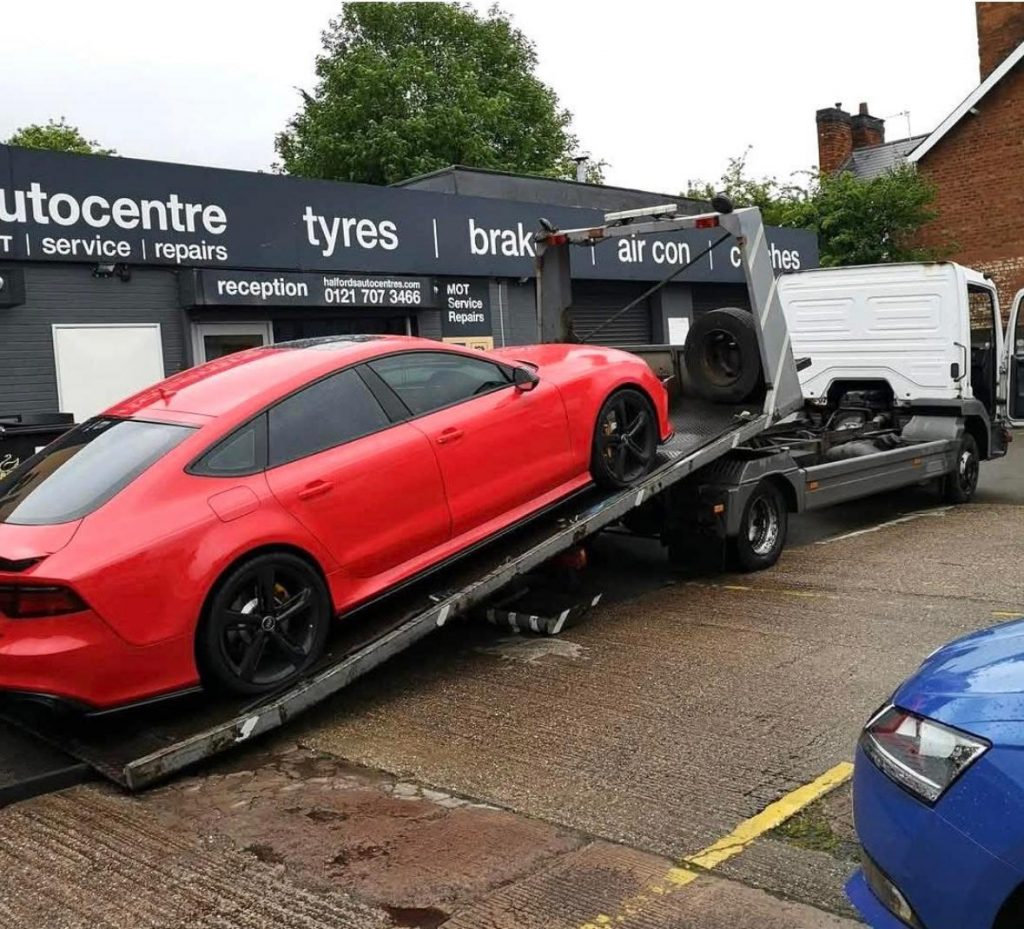
Accident recovery is the removal and transport of a vehicle that has been involved in a road traffic collision, usually carried out with a flatbed or winch, taking the car to a garage, bodyshop, storage compound, or your home. If you’ve just been in a crash anywhere in Birmingham or the wider West Midlands, Birmingham Recovery 247 can get a marked recovery vehicle to you, day or night, and take your car somewhere safe.
You do not need to work out how to move a damaged vehicle yourself. One call puts a uniformed driver on the road to you, with GPS-tracked dispatch used to find whoever is closest.
Call now for immediate 24/7 accident recovery. Prefer not to call? Use our online quote request form, and we’ll get straight back to you.
What Should You Do Immediately After a Car Accident in Birmingham?
Stop the car, switch on your hazard lights, and check for injuries before doing anything else. If you’re on a busy stretch like the Aston Expressway, the A45, or anywhere near Spaghetti Junction, getting yourself and any passengers away from moving traffic matters more than the vehicle.
- Stop the vehicle and turn off the engine.
- Put your hazard lights on so approaching traffic can see you.
- Move away from the carriageway if it’s safe to do so. Don’t stand between vehicles or on the hard shoulder itself.
- Check everyone for injuries. Call 999 immediately if anyone is hurt or the road is blocked.
- Leave a badly damaged vehicle where it is if moving it isn’t safe. A car with structural damage can cause further harm if driven or dragged.
- Take photos of the scene, vehicle positions, and any visible damage before recovery arrives, useful for both the recovery driver and any insurance claim.
- Call Birmingham Recovery 247. We take it from there.
If you’re stranded on the hard shoulder of the M6, M5, or M42, stay behind the safety barrier if you can get there safely, and keep well away from live lanes until help arrives.
What not to do
- Don’t try to drive a vehicle that’s leaking fluid, pulling to one side, or has a warning light for airbags or braking systems.
- Don’t move a vehicle that’s blocking a live lane unless a police officer instructs you to, or you can do so safely in seconds.
- Don’t accept recovery from an unlicensed operator who turns up unsolicited at the scene. This happens on Midlands motorways more than most drivers expect, and it can leave you without insurance cover for the recovery and without any control over where your car is taken.
- Don’t sign anything at the roadside you haven’t read, particularly documents relating to storage fees or repair authorisation.
When Do You Need Accident Recovery?
You need accident recovery, not a standard breakdown call-out, whenever a vehicle has been damaged in a collision and either can’t be driven or shouldn’t be. The signs aren’t always obvious at first glance.
Call for accident recovery if:
- The vehicle won’t start or has lost power after the impact.
- Steering or braking feels different to normal.
- Airbags have deployed.
- Fluid is leaking from underneath the car (oil, coolant, or fuel).
- There’s visible damage to the bodywork, wheels, or frame that could affect how the car handles.
- Police or highways officers ask for the vehicle to be moved.
- Warning lights have appeared on the dashboard that weren’t there before the crash.
- The vehicle is blocking a live lane, junction, or driveway and needs to be cleared.
A car that still moves under its own power isn’t automatically safe to drive. Continuing a journey in a vehicle with hidden structural or mechanical damage risks breaking down again further down the road, failing a police roadside check, or putting other drivers at risk.
What Is Accident Recovery?
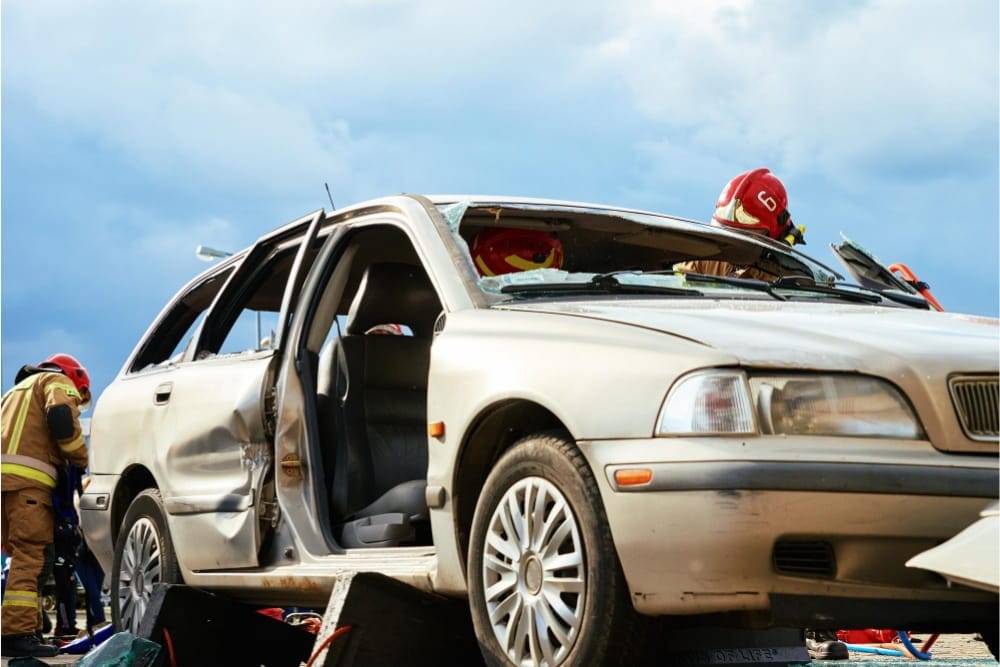
Accident recovery, sometimes called casualty vehicle recovery, is the process of collecting a vehicle that’s been in a road traffic collision and transporting it somewhere safe. It’s a distinct service from routine breakdown recovery.
A breakdown is usually a mechanical fault: a flat battery, a puncture, an engine that won’t start. The car is often still structurally sound. An accident-damaged vehicle is different. It may have a bent chassis, a cracked wheel, leaking fluids, or airbags that have already fired. That changes how it needs to be handled.
A recovery operator carries out a roadside safety assessment first, checking whether the car can be moved safely and how. Vehicles that can’t be driven onto a ramp under their own power are usually winched onto a flatbed. Vehicles that are more mobile might use wheel-lift recovery, though flatbed transport is generally the safer option after a collision because the whole car is carried rather than towed on its own wheels.
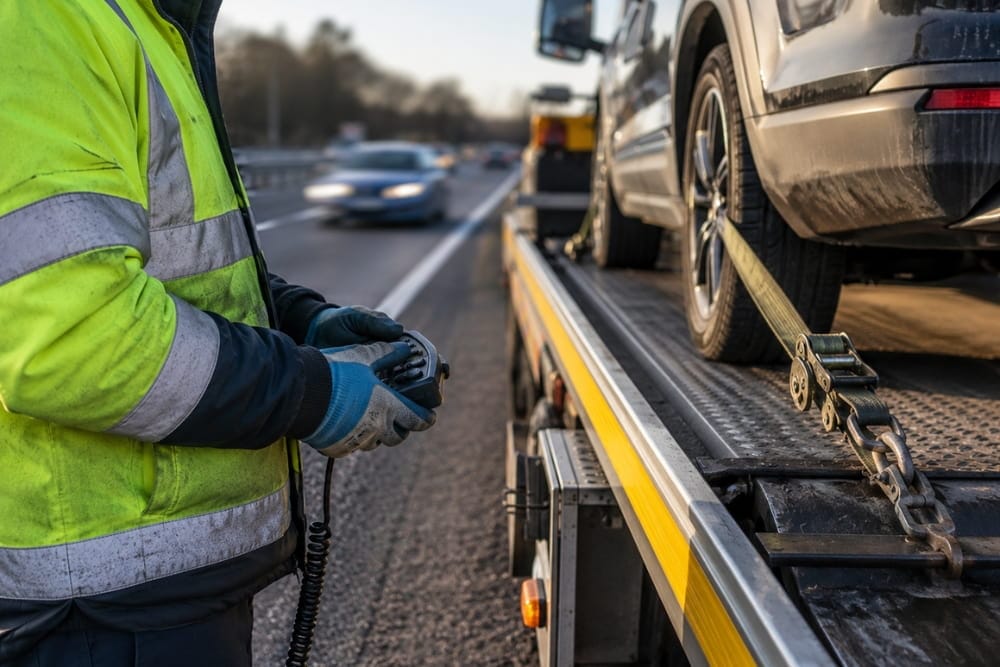
Once loaded, the car is secured with load-securing straps, and wheel skates are sometimes used underneath damaged or locked wheels to allow safe movement without further strain on the suspension or drivetrain.
In a city as busy as Birmingham, getting a damaged vehicle off the road quickly also matters for traffic flow. A car stuck in a live lane near the Bullring, on Broad Street, or at a junction off the Aston Expressway creates a second hazard for everyone behind it. Fast, controlled removal reduces that risk.
Accident Recovery Services We Provide in Birmingham
Birmingham Recovery 247 provides full accident recovery cover across Birmingham and the West Midlands, from a single-vehicle prang on a residential street to a multi-vehicle pile-up on the motorway.
- Emergency accident recovery, available around the clock, every day of the year, across Birmingham and neighbouring areas.
- Motorway and dual carriageway recovery on routes like the M6, M5, M42, and around Spaghetti Junction, carried out with the traffic management steps these high-speed roads require.
- Secure vehicle storage, for when a car can’t go straight to a garage or the next step isn’t confirmed yet.
- Transport to your chosen destination, whether that’s a garage you already use, an insurance-approved repairer, a salvage yard, or your home.
- Insurance-approved recovery, with direct liaison between our team and your insurer where it’s needed.
Every job starts with the same priority: get you and your passengers safe, then get the vehicle moved without making the damage worse.
How Our Accident Recovery Process Works
From the moment you call to the moment your vehicle’s dropped off, every step is handled by a trained operator. Here’s exactly what happens.
1
You call us
Our line is answered 24 hours a day. We take your location, a description of the vehicle, and what’s happened. GPS-tracked dispatch finds the nearest available driver and sends them out while you’re still on the phone.
2
A recovery vehicle is sent to you
A marked recovery vehicle, driven by a uniformed operator, heads to your location. If you’re on a motorway or a fast A-road, the driver will position the vehicle to help shield the scene from oncoming traffic.
3
A roadside safety assessment
Before anything is loaded, the driver checks the vehicle over, looking at whether it can be driven onto a ramp, needs winching, or needs a wheel-lift. This decides which equipment gets used.
4
The vehicle is loaded and secured
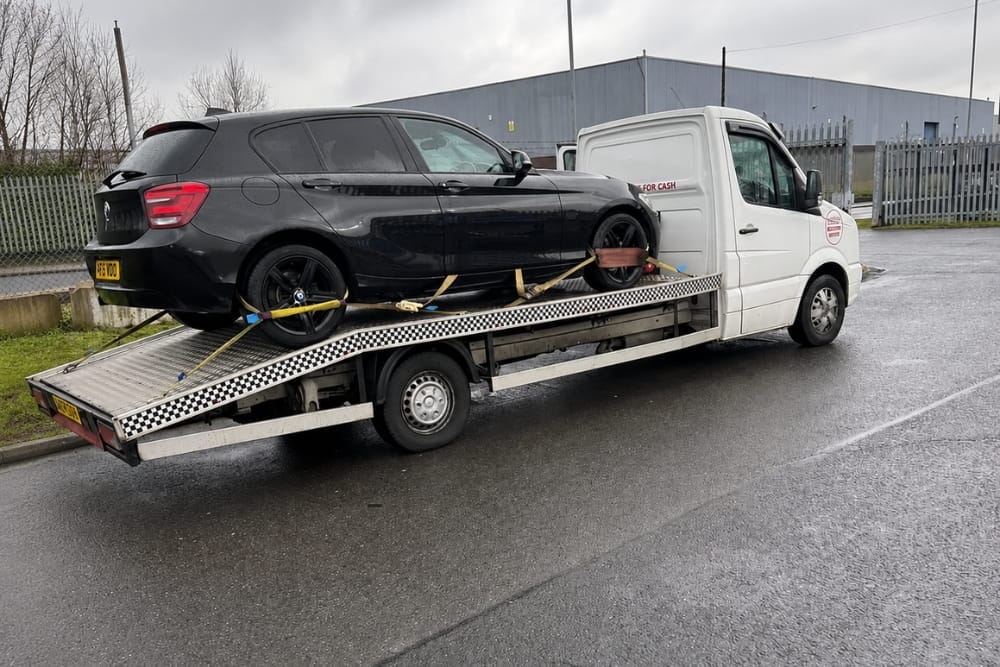
Immobile cars are typically winched onto a flatbed. Load-securing straps hold the vehicle in place for transport, and wheel skates are used where a wheel is locked or damaged, so the car can be moved without dragging it.
5
Transport to your destination
The vehicle is driven to wherever it needs to go: a garage, a bodyshop, an insurance-approved repairer, a storage compound, or your home address.
6
Confirmation and next steps
Once the car is delivered, we confirm it’s arrived and talk you through what typically comes next, whether that’s a damage assessment, notifying your insurer, or arranging onward transport for you.
What Types of Vehicles Do We Recover After an Accident?
Different vehicles need different equipment, and using the wrong method can cause damage of its own. Here’s how we match the vehicle to the method.
| Vehicle Type | Typical Recovery Method |
|---|---|
| Cars (all sizes) | Flatbed transporter |
| Vans and light commercials | Flatbed transporter |
| Motorcycles | Specialist restraints on flatbed |
| Campervans | Assessed per vehicle size |
| All-wheel-drive and low-clearance vehicles | Flatbed only, no wheel-lift |
All-wheel-drive vehicles and low-clearance cars need flatbed loading specifically. Using wheel-lift equipment or a tow bar on these vehicles risks damaging the drivetrain. Birmingham Recovery 247 matches the equipment to the vehicle every time, rather than using a one-size-fits-all approach.
What Our Clients Say
Posted on Google
 Varikuppala SHIVA 1K4
Trustindex verifies that the original source of the review is Google.
Very good service and kind hearted guy , I highly recommend thisPosted on Google Amritpal BilkhuGreat guy with a brilliant personality Very reliable. Excellent service.Posted on Google
 Genelle OsborneReally reliable and friendly, was quick and easy to book in getting my car dropped off at the garagePosted on Google
 Usman AliGreat service from Bash, I broke down and he recovered me rapid and was reasonably priced I would defo recommend using his services if your ever in need of a recovery.Posted on Google
 Dominique ShepherdTook care on putting car on truck and was a well mannered approachable personPosted on Google
 Lee DohertyExcellent service provided by Birmingham recovery 247, broke down and needed towing to my local garage, arrived when he said he would, loaded the vehicle swiftly and was very polite, wouldn't hesitate to recommend to family and friends.Posted on Google
 OHHYOUGOTJOKES FAMHe was cool had a right chat About life you don't understand how angry I was with my car but he was super coolPosted on Google
 Chris WalkerGreat independent Owner Operator recovered my Classic Lambretta within 40 minuets and got us both home safe.
Roadside Assistance vs Accident Recovery: What’s the Difference?
Roadside assistance fixes a fault at the roadside so you can continue your journey; a jump start, a tyre change, topping up a fluid. It assumes the vehicle is otherwise drivable.
Accident recovery moves the vehicle away from the scene because it isn’t safe or legal to continue driving, whether that’s due to collision damage, a blocked lane, or a police instruction. There’s no attempt to fix the car at the roadside; the goal is to get it, and you, away from the scene safely.
If you’re not sure which applies, the deciding question is simple: is the vehicle safe to drive right now, as it is? If the answer is no, or you’re not certain, you need recovery rather than roadside assistance.
Accident Recovery Cost Factors
Exact cost depends on your situation and is confirmed when you call, but the main factors are:
| Factor | Effect on cost |
|---|---|
| Distance travelled | Longer distances from the scene to the destination increase cost |
| Vehicle size and weight | Vans, HGVs, and fleet vehicles need larger recovery vehicles than a standard car |
| Time of day | Overnight and peak-time calls can affect availability and cost in some circumstances |
| Recovery method required | Winch recovery from a ditch or verge takes longer and involves more equipment than a straightforward flatbed load |
| Fault status | Non-fault recovery is typically recovered in full from the at-fault insurer; fault or unclear-fault cases are usually paid upfront and claimed back |
If your accident is non-fault and your insurer arranges recovery, there is usually no direct cost to you at the roadside.
Is Accident Recovery Covered by Insurance? (Fault vs Non-Fault)
Whether recovery is covered depends on your policy and who was at fault, but in most cases recovery costs are dealt with through the insurance process rather than paid directly by you at the roadside.
If the accident wasn’t your fault
The at-fault driver’s insurer is typically responsible for the reasonable cost of recovering your vehicle, along with repair and, where applicable, a replacement or courtesy vehicle. Birmingham Recovery 247 can liaise directly with insurers to help this run smoothly, though the exact outcome always depends on your policy and the details of the claim.
If the accident was your fault
Recovery is usually still covered under your own motor insurance policy as part of your cover, though this can affect your excess or no-claims position depending on your policy terms. It’s worth checking your documents or calling your insurer to understand exactly what’s included.
We’re not able to guarantee claim outcomes, excess amounts, or whether a specific cost will be covered. What we can guarantee is that we’ll get your vehicle off the road safely and keep you informed, while you deal with the insurance side separately or with our help liaising on your behalf.
Whatever the circumstances, call us first. Getting the vehicle to safety is the priority; the insurance conversation can follow.
What Happens After Recovery?
Once your vehicle is off the road, it typically goes through a few clear stages before you’re back on the road yourself.
- Damage assessment: A garage or assessor inspects the vehicle and writes up a report of the damage. This is usually the document your insurer works from.
- Insurer notification: If you haven’t already told your insurer, this should happen as soon as possible. Many insurers ask for notification within 24 hours of a collision, regardless of fault.
- Repair or write-off decision: The insurer or assessor decides whether repairing the car makes financial sense. If repair costs are higher than the car’s value, it may be declared a total loss and a settlement offered instead.
- Courtesy or replacement vehicle: Depending on your policy and the circumstances, you may be entitled to a temporary vehicle while yours is off the road. Check your policy or ask your insurer directly.
Birmingham Recovery 247 can point you toward the right first steps once your car has been delivered, but we don’t manage the claim itself. Our job is making sure the vehicle gets to the right place so the rest of the process can start without delay.
How Does Motorway Accident Recovery Work in Birmingham?
Motorway recovery follows stricter procedures than a residential street call-out, because of the speed of traffic and the risk to everyone involved. Drivers working the M6, M5, M42, and the A38(M) Aston Expressway are trained to manage the scene as well as the vehicle, positioning the recovery truck to help protect the area and coordinating with police or National Highways where necessary.
Key routes we cover:
- M6, through the Birmingham and Walsall corridor
- M5, around West Bromwich and Bromsgrove
- M42, from Bromsgrove through to Tamworth
- A38(M) Aston Expressway, a frequent site of rush-hour incidents
- A45, connecting Birmingham to Solihull and the airport
- Spaghetti Junction, where the M6 meets multiple routes and collisions can quickly back up traffic across several carriageways
If you’re stuck on a motorway, stay in the vehicle with your seatbelt on until told otherwise, or get behind the barrier if it’s safe to do so. Always call 999 first if anyone is injured, then call us.
Which Areas Does Birmingham Recovery 247 Cover for Accident Recovery?
We cover the full spread of Birmingham and reach well into the surrounding West Midlands, with drivers positioned across the region rather than dispatched from one single depot. That local spread is what keeps response times down, whether you’ve broken down in the city centre or out toward Wolverhampton.
- Central Birmingham: City Centre, Bullring, New Street, Broad Street, Jewellery Quarter, Digbeth
- North & East Birmingham: Aston, Perry Barr, Erdington, Sutton Coldfield, Handsworth, Yardley, Castle Vale
- South Birmingham: Selly Oak, Edgbaston, Harborne, Bournville, Kings Heath, Moseley, Northfield
- Wider West Midlands: Solihull, West Bromwich, Walsall, Wolverhampton, Dudley, Smethwick, Sandwell, Halesowen, Stourbridge
Different areas bring different challenges. Heavy traffic through the city centre and around the Bullring means an incident can hold up buses, taxis, and pedestrians as well as other drivers. Narrow residential streets in Moseley or Kings Heath can make loading a damaged vehicle onto a flatbed trickier than on an open road, which is exactly the kind of situation an experienced recovery driver is trained to handle.
On the motorway network, especially around Spaghetti Junction and the M6/M42 interchange, the challenge shifts to speed and safety, getting a damaged vehicle clear before it causes a second incident.
Why Choose Birmingham Recovery 247 for Accident Recovery?
Our approach is built around what actually protects your vehicle and your interests after a collision, not just getting to you quickly.
- Available 24 hours a day, 7 days a week, 365 days a year. Accidents don’t wait for office hours, and neither do we.
- Fully insured recovery operation, with DVSA-compliant vehicles and drivers.
- GPS-tracked fleet, so dispatch finds the nearest available driver and gives you an accurate arrival estimate rather than a guess.
- Experienced accident recovery team, trained specifically in casualty vehicle recovery, not just routine breakdowns.
- Clear, honest communication. You’re told what’s happening at each stage, with no hidden surprises.
- Direct liaison with insurers where required, to help take some of the admin off your plate.
- The right equipment for the vehicle, flatbeds, winches, wheel-lift gear, load-securing straps, and wheel skates, so nothing gets dragged or damaged further in the process.
Need Accident Recovery in Birmingham Right Now?
If your vehicle isn’t safe to drive, don’t wait. Call us, and we’ll dispatch the nearest available recovery vehicle to you, matched to your car and your location.
Frequently Asked Questions
How quickly will you arrive?
How quickly will you arrive?
Response times vary depending on your location and traffic conditions, but we aim to arrive within 30–45 minutes in most cases. Our GPS-tracked dispatch sends the nearest available driver to reduce waiting time. Give the operator your exact location when you call for the most accurate arrival estimate.
Can you take my car to my own garage instead of a repair centre you choose?
Can you take my car to my own garage instead of a repair centre you choose?
Yes. Vehicles can be delivered to a garage you already use, an insurer-approved repair centre, your home, or our secure storage compound if a decision hasn’t been made yet.
Is accident recovery different from breakdown recovery?
Is accident recovery different from breakdown recovery?
Yes. Breakdown recovery deals with mechanical faults on a car that’s usually still structurally sound. Accident recovery, or casualty vehicle recovery, deals with a vehicle that’s been in a collision and may have structural damage, leaking fluids, or deployed airbags, which changes how it needs to be assessed and moved.
Do you recover vehicles from the motorway?
Do you recover vehicles from the motorway?
Yes, including the M6, M5, M42, and routes around Spaghetti Junction and the A38(M) Aston Expressway. Motorway recovery follows stricter safety procedures because of the speed and volume of traffic.
Do I need to move my car before you arrive?
Do I need to move my car before you arrive?
Only if it is safe to do so and the vehicle can still be driven a short distance out of a live lane. If it will not start, feels unsafe to steer or brake, or has visible structural damage, stay clear of the vehicle and wait for the recovery operator.