Breakdown Recovery in City Centre, Birmingham | 24/7 Callout
A car that won’t start on Colmore Row at 8 am causes a different problem than the same fault on a quiet suburban close. Bus lanes, one-way streets, Clean Air Zone cameras and a constant flow of pedestrians around the Bullring and Grand Central all raise the stakes.
Birmingham Recovery 247 answers breakdown calls across B1, B2, B3, B4 and B5 every hour of the day, getting a driver who knows these streets to you fast and moving your car safely, whether that means a quick roadside fix or a full recovery to your garage of choice.
Breakdown Recovery Coverage Across City Centre, Birmingham
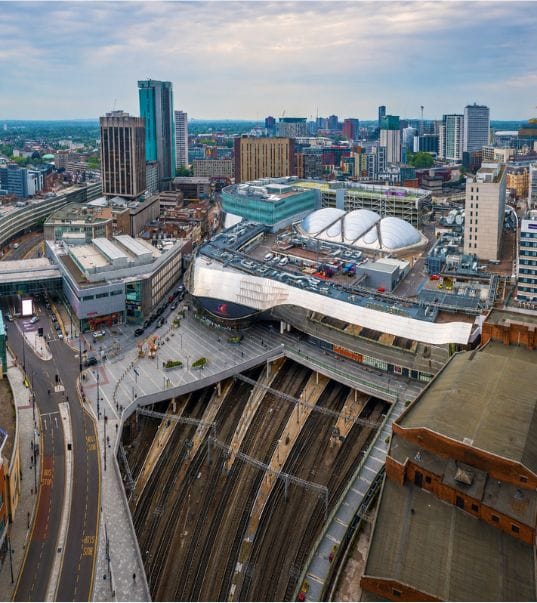
Our breakdown recovery coverage sits inside the Middleway ring road the boundary Birmingham City Council uses to define the city centre, and takes in all nine districts within it: the city centre core, Westside, Eastside, Southside, Digbeth, the Jewellery Quarter, the Gun Quarter, Highgate and Ladywood. That means retail streets around the Bullring and Grand Central, the business district along Colmore Row and Victoria Square, the bars and restaurants on Broad Street and around the Mailbox, and the newer Paradise development near Chamberlain Square.
Main approach roads fall inside our standard response area too: A38 Queensway, A4400 St Chads Queensway, A4540 Middleway, Suffolk Street Queensway, and the A38(M) tunnel section that catches out drivers unfamiliar with its access rules. Breakdowns just beyond the ring road in Edgbaston, Aston, Nechells or Deritend still fall within dispatch range, so a fault on the approach into the centre doesn’t leave anyone waiting on the boundary.
What Our Clients Say
Posted on Google
 Varikuppala SHIVA 1K4
Trustindex verifies that the original source of the review is Google.
Very good service and kind hearted guy , I highly recommend thisPosted on Google Amritpal BilkhuGreat guy with a brilliant personality Very reliable. Excellent service.Posted on Google
 Genelle OsborneReally reliable and friendly, was quick and easy to book in getting my car dropped off at the garagePosted on Google
 Usman AliGreat service from Bash, I broke down and he recovered me rapid and was reasonably priced I would defo recommend using his services if your ever in need of a recovery.Posted on Google
 Dominique ShepherdTook care on putting car on truck and was a well mannered approachable personPosted on Google
 Lee DohertyExcellent service provided by Birmingham recovery 247, broke down and needed towing to my local garage, arrived when he said he would, loaded the vehicle swiftly and was very polite, wouldn't hesitate to recommend to family and friends.Posted on Google
 OHHYOUGOTJOKES FAMHe was cool had a right chat About life you don't understand how angry I was with my car but he was super coolPosted on Google
 Chris WalkerGreat independent Owner Operator recovered my Classic Lambretta within 40 minuets and got us both home safe.
What Happens When You Call for Breakdown Recovery
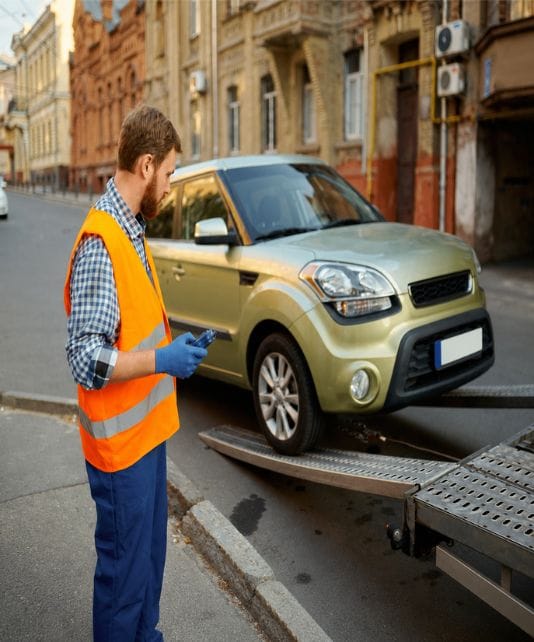
Every call follows the same clear sequence, so you know what’s happening at each stage rather than waiting in the dark. Here’s what to expect from the moment you dial through to the moment your car reaches its destination.
- You describe the fault: Warning lights, a burning smell, the engine cutting out, a car that won’t start at all this detail decides whether we send a jump-start van or a flatbed, and it decides that before a vehicle even leaves the yard.
- You give us the exact spot: A postcode, a shop front, a car park level, a Metro stop like Grand Central or Bull Street anything specific lets the driver plan a route around the one-way system rather than getting caught in it.
- A driver gets dispatched straight away: Being based in the city keeps travel times short even during the 7:30–9:30am and 4:30–6:30pm peaks, when Broad Street and the approaches to New Street station slow to a crawl.
- The vehicle gets assessed on site: A flat battery, a simple tyre problem or a fuel mix-up often gets sorted at the roadside in minutes. Anything involving the engine, gearbox or brakes moves to recovery instead.
- The car goes where you choose: Garage, dealership, home address, workplace the destination is set by the customer, not by which repairer we prefer to work with.
Why Breakdown Recovery Calls Rise in City Centre, Birmingham
Stop-start traffic through the centre puts different stress on a vehicle than a steady motorway run, and it shows up in the callouts we handle most.
- Flat or weak battery: The most common reason we’re called, particularly through autumn and winter. Repeated short journeys and heavy traffic near the Bullring or along Corporation Street never let the alternator fully recharge the battery, so it fails at the worst possible moment.
- Overheating: Slow crawls through roadworks or queuing traffic on the Middleway strain a cooling system that’s built for motion, not standing still. Older vehicles and anything already low on coolant are most at risk.
- Tyre damage: Tight turns around the one-way system, kerbs near pedestrianised zones, and uneven surfaces around Digbeth account for a steady stream of punctures and sidewall damage, especially on lower-profile tyres.
- Fuel problems: Drivers concentrating on junctions and lane changes through the centre are more likely to misjudge the fuel gauge or, occasionally, misfuel than drivers on a familiar suburban route.
- Clutch and gearbox wear: Constant stopping at lights and junctions around St Chad’s Circus wears a manual clutch faster than open-road driving, particularly in vehicles used mainly for city commuting.
- Electrical faults: Modern cars run dozens of linked sensors and control modules. One faulty connection can trigger a warning light and immobilise the car until it’s diagnosed properly.
The First 60 Seconds Before Breakdown Recovery Arrives
What you do in the moment after a breakdown affects both your safety and how quickly we can reach you.
1. Get the car to the nearest kerb, side street or car park bay if it’s safe to move it. Staying in a live lane on the Queensway or Middleway is the single biggest risk factor in a city-centre breakdown.
2. Put your hazard lights on immediately, whether you’re already parked or still in traffic.
3. Stay inside the vehicle if you’re stopped in a live lane, and only get out if remaining inside is the more dangerous option.
4. Call us before waiting to see whether the fault clears itself. Every extra minute stationary in a bus lane or loading bay increases the chance of a ticket on top of the breakdown.
5. Give a clear location nearest junction, postcode, or a landmark like Snow Hill station or the Mailbox and note the registration and any symptoms so the driver arrives prepared.
Roadside Fix or Full Breakdown Recovery?
Not every breakdown needs a truck. As a rough guide:
- Usually fixable on the spot: a flat battery (jump-start), a flat tyre with a usable spare, running out of fuel, or a warning light that clears after a simple reset.
- Usually needs full recovery: overheating with visible coolant loss or smoke, a gearbox that’s grinding or unresponsive, a warning light pointing to engine or transmission failure, or any fault where driving on risks turning a repair into a write-off.
If it’s not obvious which category applies, describe the symptoms on the phone. That’s enough for us to make the call before a vehicle is even sent.
What Affects Breakdown Recovery Times in City Centre, Birmingham
No two callouts take exactly the same time, and being upfront about why saves any confusion later. These are the factors that most often shift how quickly we reach you.
| Factor | Why it matters |
|---|---|
| Time of day | Peak traffic (7:30–9:30am, 4:30–6:30pm) around the Bullring and Broad Street extends arrival times |
| Exact location | Pedestrianised zones and restricted streets can add a few minutes for safe access |
| Type of fault | A roadside fix is quicker than loading and transporting a vehicle |
| Vehicle size | Vans and larger vehicles may need a different truck, which affects which driver is free |
| Destination distance | A tow within the city centre is faster than recovery to a garage outside Birmingham |
We confirm price and destination on the phone before dispatch, so nothing changes once the vehicle is loaded.
Vehicles We Cover for Breakdown Recovery
Cars account for most callouts, but vans and light commercials make up a real share of the work businesses trading out of Digbeth, the Jewellery Quarter and Broad Street rely on delivery and trade vehicles daily, and they get the same response time as any car. Motorcyclists near the station approaches or the retail core get a driver equipped for two-wheel recovery specifically, not a car setup adapted on the fly. Every vehicle is loaded and strapped using equipment built for that vehicle type.
Who Relies on Breakdown Recovery in City Centre, Birmingham
Office staff on Colmore Row whose car won’t start after a late finish. Retail and hospitality workers leaving shifts around the Mailbox and Broad Street once public transport has thinned out. Hotel guests near the Arena and Grand Central who’ve hired a car for the weekend and have no idea where the local garages are. Traders and couriers moving stock through Digbeth market days and the Jewellery Quarter.
Commuters heading for New Street or Snow Hill who find the fault the moment they’ve parked. Students and staff near the Aston University edge of the centre catching a fault on the daily run in. The pattern spans retail, business, hospitality and residential activity packed into a small footprint which is exactly why local knowledge matters more here than almost anywhere else in the city.
Need Breakdown Recovery in City Centre, Birmingham Right Now?
Call Birmingham Recovery 247 for immediate, fully insured breakdown recovery across Birmingham City Centre available every hour, every day.
Frequently Asked Questions
How quickly can you reach a breakdown in the city centre, Birmingham?
How quickly can you reach a breakdown in the city centre, Birmingham?
It depends on traffic and your exact spot, but city-centre callouts get priority because of the safety risk a stationary vehicle creates in a busy area. We give a realistic arrival estimate before the driver sets off.
Which postcodes and areas do you cover?
Which postcodes and areas do you cover?
B1, B2, B3, B4 and B5, plus the approaches from Edgbaston, Aston, Nechells and Deritend.
Can you recover a car from a multi-storey car park?
Can you recover a car from a multi-storey car park?
Yes. Our drivers work the car parks around the Bullring and Snow Hill regularly and carry the equipment needed for tight barriers and low clearance.
What happens if I’m stuck in a bus lane or loading bay?
What happens if I’m stuck in a bus lane or loading bay?
Put your hazards on and call immediately. These restrictions are enforced closely, so getting the vehicle moved quickly matters for avoiding a penalty as much as for safety.
Do you recover vans and motorcycles as well as cars?
Do you recover vans and motorcycles as well as cars?
Yes, each with equipment matched to that vehicle type rather than a generic setup.
What if I don’t know what’s actually wrong with the car?
What if I don’t know what’s actually wrong with the car?
That’s normal you don’t need to diagnose it yourself. Describing what you noticed (noises, warning lights, smells, how it behaved just before stopping) gives us enough to send the right vehicle first time.
Can I be recovered to a garage outside Birmingham?
Can I be recovered to a garage outside Birmingham?
Yes. We take vehicles to a garage, dealership or home address beyond the city centre; distance affects the overall cost.