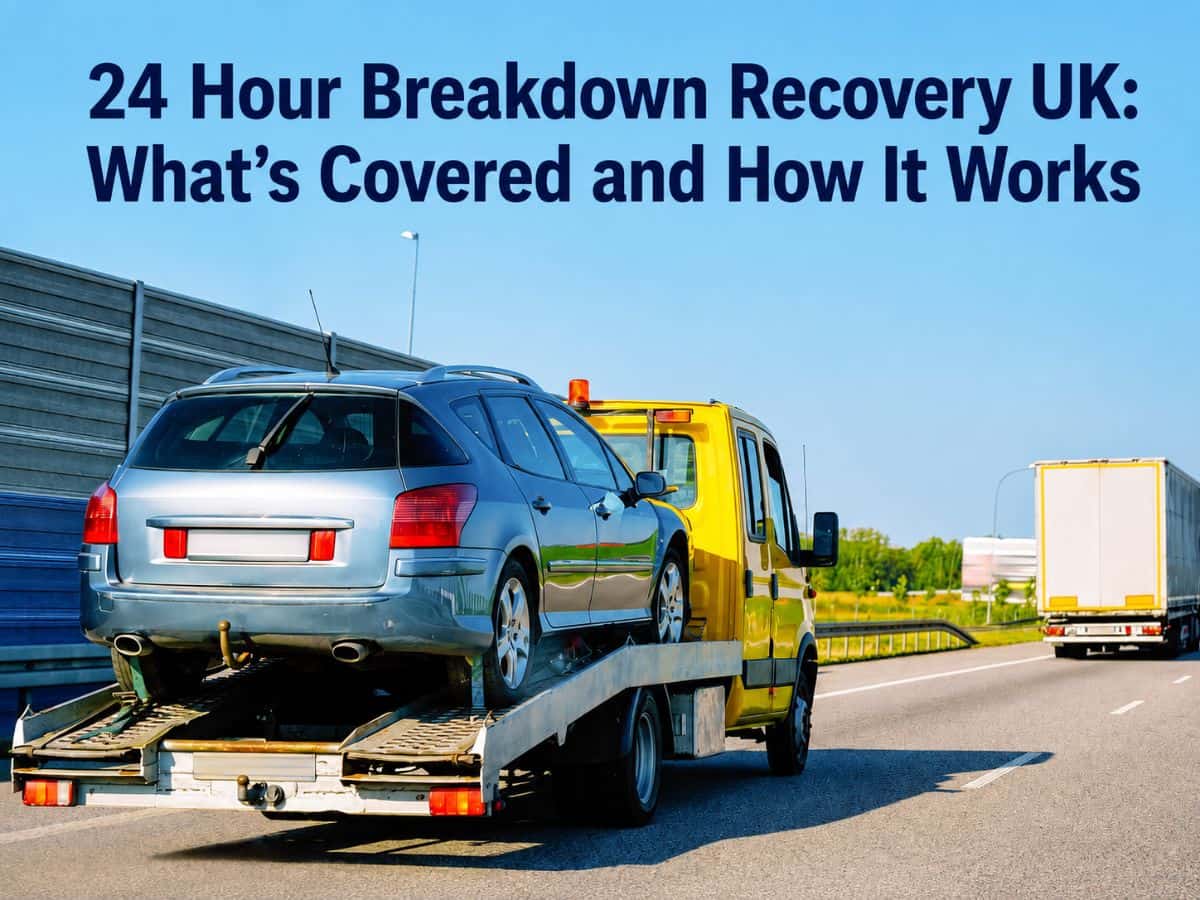
A car breaks down without warning, day or night, and leaves the driver stranded until help arrives. 24-hour breakdown recovery sends a technician to fix the fault at the roadside or tow the vehicle to a garage, whatever the time. Cover typically spans roadside repairs, towing, and onward travel support. The process follows a clear sequence: contact, dispatch, on-site assessment, and recovery if the fault stays unresolved. Flat tyres, dead batteries, and engine faults account for most callouts.
Response times sit between 30 and 60 minutes in urban areas, with towing adding further time. Call-out fees vary by distance, vehicle type, and time of day. Safety steps differ by location, and choosing a reliable provider comes down to coverage, response times, and customer service.
What Is 24-Hour Breakdown Recovery?
24-hour breakdown recovery is a round-the-clock service that helps drivers whose vehicles have stopped working, at any hour, on any day of the week. A technician either fixes the fault at the roadside, provides a jump start, a tyre change, a quick repair, or, if that’s not possible, tows the vehicle to a garage or another location the driver chooses.
The service matters most in situations where waiting isn’t safe. A vehicle stopped on a motorway hard shoulder, a driver alone on an unlit country road, or a family stranded late at night all need a fast, reliable response rather than a next-day appointment. Providers cover motorways, side streets, and rural lanes alike, and they operate through all weather conditions, since faults don’t become less likely in the rain or snow.
Most policies bundle three core elements: roadside assistance, vehicle towing, and onward travel support if the car can’t be driven again that day. The exact mix varies by provider, which is why it’s worth checking the policy details rather than assuming full coverage.
What Does a 24-Hour Breakdown Recovery Service Cover?
A 24-hour breakdown recovery service covers the faults that most often strand drivers, along with the practical support needed once help arrives. Coverage runs from quick roadside fixes through to full vehicle towing, plus extra help getting the driver back on the move afterwards.
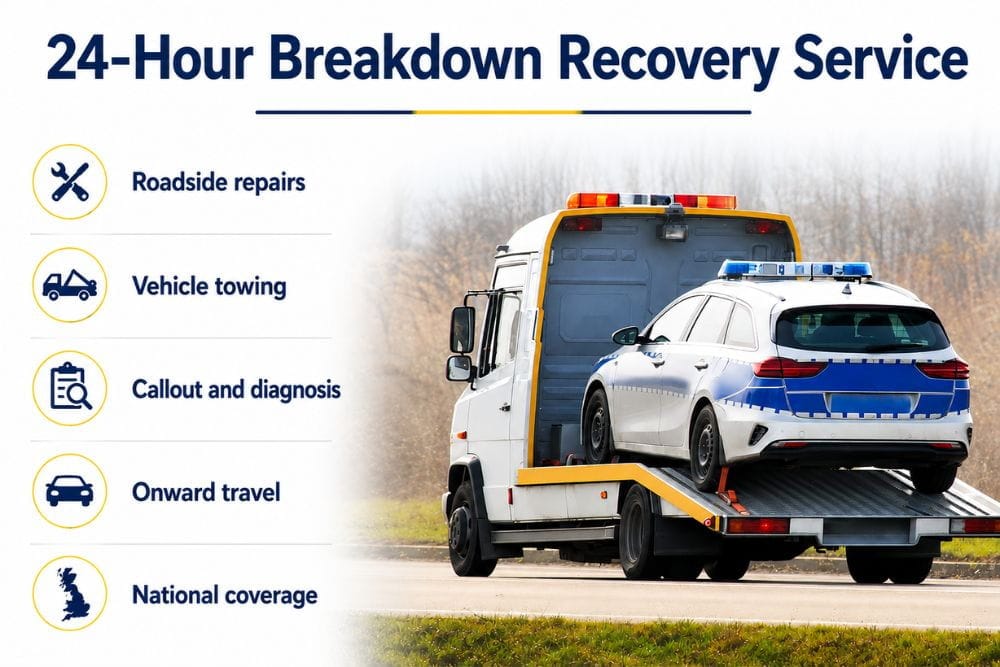
- Roadside repairs: A technician handles jump starts, tyre changes, and minor fixes at the roadside, getting many drivers back on the road without any towing required.
- Vehicle towing: If a fault can’t be resolved on the spot, the recovery vehicle tows the car to a local garage, a home address, or another chosen location.
- Callout and diagnosis: A technician arrives, assesses the fault, and decides quickly whether it can be fixed on-site or whether the vehicle needs recovering elsewhere.
- Onward travel: Many policies include a taxi, hire car, or overnight accommodation when the vehicle can’t be driven and the driver is stranded far from home.
- National coverage: Most established providers operate across the whole of the UK rather than a single region. This matters for drivers who regularly travel long distances, commute between cities, or take road trips outside their local area, since a provider with limited reach can struggle to help once a driver is far from home.
Weather and terrain both shape how a callout plays out. Winter conditions drain batteries faster and make icy roads harder to work on safely, so technicians carry equipment suited to those risks: proper lifting gear, secure straps, and lighting to stay visible on dark roads. A recovery vehicle needs the right setup for the vehicle in question too: ramps for vans, soft-hook towing for smaller cars, balanced mounts for motorbikes.
How Breakdown Recovery Works
Breakdown recovery follows a fairly consistent sequence across providers, from the first call through to the vehicle reaching safety.
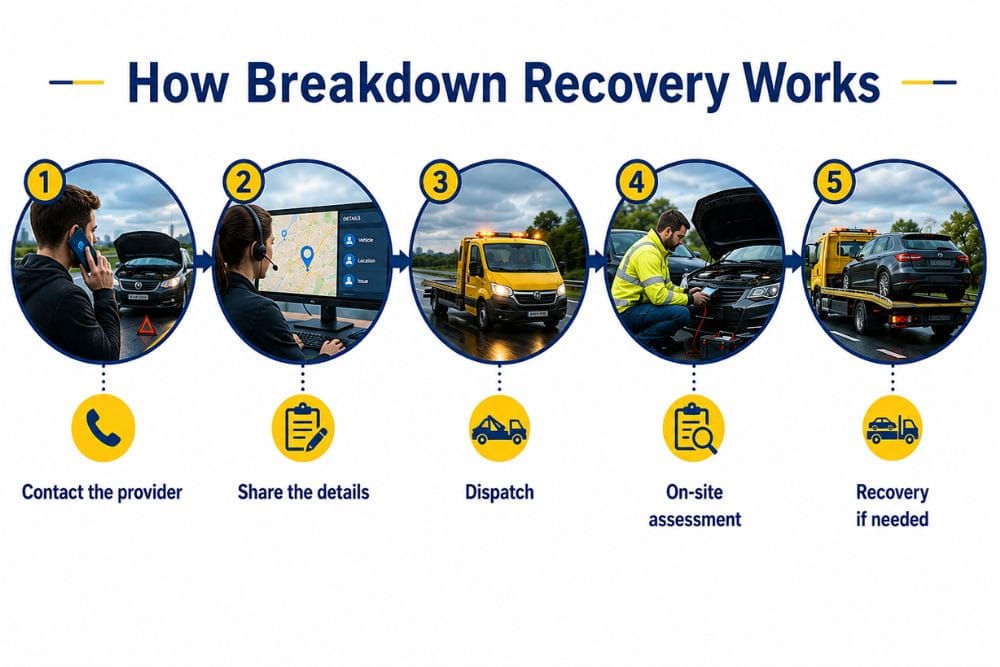
- Contact the provider: The driver calls the helpline or opens the app to report the breakdown and start the process moving.
- Share the details: Location, vehicle type, and a short description of the fault help the provider prepare the right support.
- Dispatch: The nearest available technician or recovery vehicle is sent out, with GPS used to track progress toward the driver.
- On-site assessment: The technician tries a roadside fix first, since many faults resolve quickly without needing a tow at all.
- Recovery if needed: When the fault can’t be fixed there, the vehicle gets loaded and towed to a garage or another chosen location.
Recovery vehicles usually carry parts and tools for the faults they see most often, so a flat battery or a punctured tyre can often be resolved without a tow at all.
What Are the Common Reasons Drivers Call for Breakdown Recovery
A handful of faults account for most callouts, and knowing them helps a driver recognise when professional help is the right call.
- Flat tyre: A puncture or blowout can make a car unsafe to drive. A technician either fits the spare or arranges a tow if no usable spare is available.
- Dead battery: The single most common breakdown cause. A jump start usually resolves it, though a battery beyond repair may need replacing.
- Lost or locked-in keys: Getting back into the vehicle without causing damage needs specialist tools, which is why this counts as a recovery callout rather than a DIY fix.
- Misfuelling: Putting the wrong fuel in the tank risks serious engine damage. The technician drains and flushes the fuel system before the car is driven again.
- Engine faults: Overheating, unusual noises, or a total failure usually mean the car needs towing rather than a roadside fix.
- Accidents: After a collision, recovery removes the damaged vehicle safely from the scene once anyone injured has been checked and the area secured.
- Stuck in mud or snow: Difficult terrain sometimes calls for winching equipment that a standard recovery vehicle carries as standard.
What to Do If Your Car Breaks Down
Safety comes before anything else once a vehicle stops working, and the right steps differ slightly depending on where the breakdown happens.
- On a motorway at night, move to the hard shoulder if possible and switch on the hazard lights immediately. Leave the vehicle from the passenger side, away from moving traffic, and stand behind the safety barrier rather than near the carriageway. Call a recovery service from a mobile phone, or use one of the roadside emergency phones, which connect directly to the police or National Highways. Have the exact location ready; the numbered marker posts along the hard shoulder make this easier.
- Running out of fuel on the motorway calls for the same first step: pull onto the hard shoulder and put the hazards on. A recovery service can usually bring enough fuel to reach the nearest petrol station, so walking along the motorway isn’t necessary or advisable.
- After an accident, check for injuries first and call 999 if anyone needs medical help. Once the scene is safe, move to a secure location away from traffic and arrange recovery for the damaged vehicle.
How Long Does Breakdown Recovery Take?
Response times for roadside assistance in urban areas typically fall between 30 and 60 minutes. If the vehicle needs towing rather than a roadside fix, loading takes a further 10 to 20 minutes, and the tow itself adds another 30 to 60 minutes depending on the distance to the garage.
Several factors push that estimate up or down. Providers such as the RAC and AA prioritise vulnerable drivers those with young children, elderly passengers, or anyone stranded somewhere genuinely dangerous, like a motorway hard shoulder. A breakdown at or very near home, by contrast, usually sits lowest on the priority list; driver forums report waits stretching from a few hours to several days during busy periods or severe weather. Extreme weather itself causes a surge in breakdowns across the network, which extends wait times generally, and a rural location adds extra travel time for the recovery vehicle to reach the driver in the first place.
How Much Does 24-Hour Breakdown Recovery Cost?
Call-out fees in the UK vary from one provider to the next, and the final price depends on several variables.
- Time of day. Late-night, weekend, and public-holiday callouts often cost more than daytime ones.
- Location. Remote areas or notoriously congested stretches, such as parts of the M25, can carry a premium.
- Vehicle type. Vans and 4x4s generally cost more to recover than a standard car.
- Nature of the fault. A jump start is cheaper than a recovery job needing specialist lifting equipment.
- Towing distance. Price rises with the distance the vehicle needs to travel.
Annual breakdown cover, bought as a policy rather than a one-off callout, often works out cheaper for drivers who expect to need the service more than once.
How to Choose a 24-Hour Breakdown Recovery Service
A handful of factors separate a dependable provider from one that leaves a driver waiting.
- Coverage area: Check the provider covers both local trips and the longer routes a driver actually takes.
- Response times: Ask what’s typical in the area, particularly during peak hours or bad weather.
- Range of services: Confirm what’s included: towing, roadside repairs, accident recovery, key or locksmith assistance, and onward travel support.
- Customer service: Round-the-clock contact lines, live tracking of the recovery vehicle, and clear updates during the wait all matter when a driver is stranded.
- Cost versus value: Compare call-out fees and annual policies against what each actually covers, not just the headline price.
- Reviews and accreditation: Independent reviews give a realistic picture of reliability, and accreditation from recognised motoring bodies is a useful signal of consistent standards.
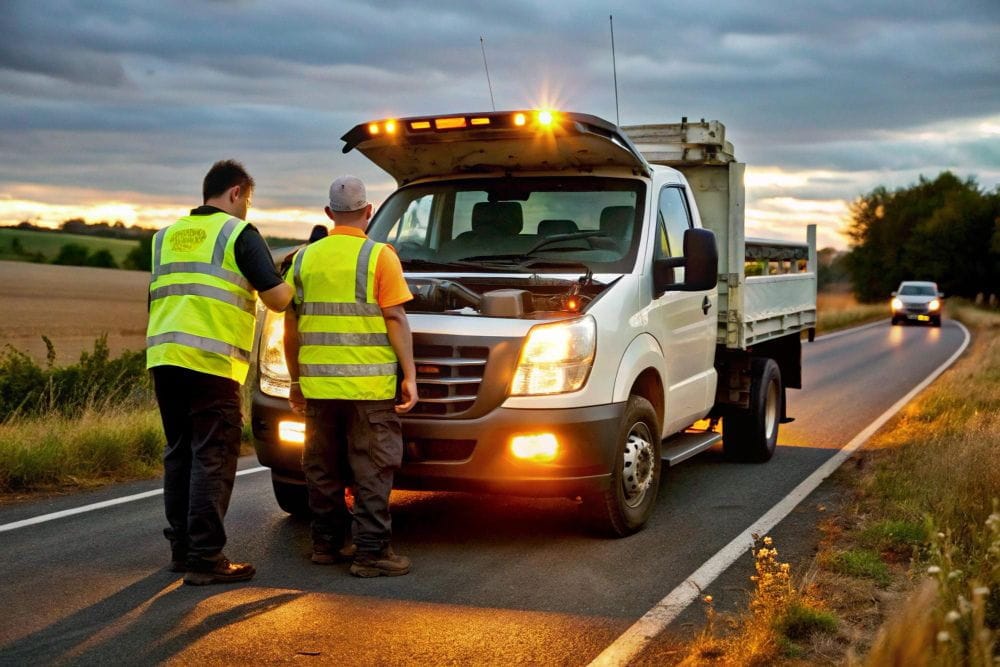
How to Find a 24-Hour Breakdown Recovery Service
Searching online for 24 hour breakdown recovery near me is usually the fastest route to a shortlist of local providers, complete with contact details and customer reviews. A local garage can also point toward a service it trusts, particularly in areas without strong online listings. Coverage is generally strongest in major cities and along key motorway routes, so drivers in rural areas should double-check response times before relying on a specific provider.
What Are the Common Mistakes Drivers Make With Breakdown Cover
The common mistakes drivers make with breakdown cover often go unnoticed until a policy fails to help when it’s needed most. Most stem from assumptions about coverage rather than the small print itself.
- Assuming home starts are included: Many roadside-only policies specifically exclude breakdowns on the driver’s own driveway, leaving them without help at the one place they’d least expect to need it.
- Not checking the vehicle age limit: Some providers cap cover for cars over 10 or 15 years old, or charge more for them, which catches out owners of older vehicles.
- Forgetting to renew before a long trip: Cover can lapse without much warning if it isn’t set to auto-renew, leaving a gap right when it matters most.
- Overlooking cover already included elsewhere: Some bank accounts, credit cards, and insurance bundles include basic breakdown cover, which can duplicate a separate policy and waste money.
- Not saving the membership number somewhere accessible: If a phone or wallet ends up in the car when it breaks down, keeping the number saved elsewhere, such as a partner’s phone or an email, saves valuable time.
Final Thoughts
A breakdown rarely gives any warning, but a reliable 24-hour recovery service takes most of the uncertainty out of it. Knowing what’s covered, how long help usually takes, and roughly what it costs means a driver isn’t guessing in the moment. The right safety steps matter just as much as the call itself, particularly on a motorway or in the dark.
Choosing a provider on coverage, response times, and genuine reviews, rather than price alone, pays off when a fault actually happens. Saving a provider’s number in advance removes one more thing to think about under pressure. However minor or serious the fault, a clear plan turns a stressful wait into a manageable one.
Frequently Asked Questions
Is 24/7 breakdown cover worth it if I have a newer car?
Is 24/7 breakdown cover worth it if I have a newer car?
Newer cars are less likely to break down mechanically, but punctures, flat batteries, and lockouts can still happen to any vehicle regardless of age. Basic roadside cover is usually inexpensive enough that most drivers find it worthwhile.
Roadside assistance vs breakdown recovery: what’s the difference?
Roadside assistance vs breakdown recovery: what’s the difference?
Roadside assistance covers faults a technician can fix on the spot, a jump start, a tyre change, or a minor repair without moving the vehicle. Breakdown recovery goes a step further: it covers towing the vehicle to a garage or another location when a roadside fix isn’t possible. Most UK providers offer both under a single policy, so the distinction matters mainly for understanding what a specific plan includes.
Can I use breakdown cover for someone else’s car?
Can I use breakdown cover for someone else’s car?
This depends on the policy. Personal cover usually follows the named individual regardless of which car they’re driving or travelling in, whereas vehicle-based cover is tied to a specific registration. Check which type applies before assuming it does.
What happens if my car breaks down and it’s not covered under my policy’s exclusions?
What happens if my car breaks down and it’s not covered under my policy’s exclusions?
The driver typically needs to arrange and pay for recovery independently, either through a local garage’s tow service or a one-off callout with a breakdown provider. This is exactly why checking the exclusions before they’re needed matters.
Does breakdown cover include a courtesy car?
Does breakdown cover include a courtesy car?
Not usually as standard, a hire car or taxi is typically only included on higher cover tiers that specifically mention “onward travel” or “alternative transport.”
Will using breakdown cover affect my car insurance or no-claims bonus?
Will using breakdown cover affect my car insurance or no-claims bonus?
No. Breakdown cover and car insurance are separate products, so a callout for a mechanical fault doesn’t get reported to the insurer or affect a no-claims bonus. It only becomes relevant to insurance if the breakdown follows an accident.