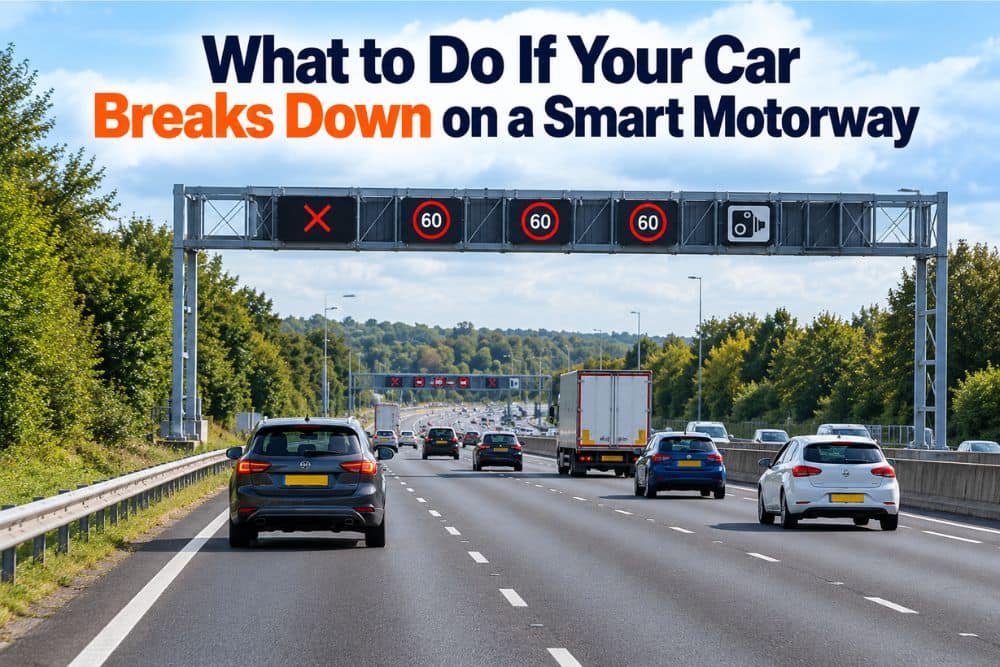
Smart motorways use active traffic management, including variable speed limits and lane control, to raise capacity. Some open the hard shoulder as a running lane. When a car breaks down on one, seven steps follow in order. Put the hazards on, move to the nearside lane, reach an emergency area and exit through the left-hand door. Wait behind the safety barrier, call 999 or National Highways, then contact the breakdown provider. The control centre closes the lane with a red X.
A road with no hard shoulder relies on emergency areas. A car failing before one coasts to the nearest safe stop. If you cannot reach a barrier safely in a live lane, stay in the vehicle and call 999. Where the lane is not closed, radar and CCTV detect the stopped car. Without signal or battery, the roadside phone and eCall button help. Controlled motorways keep a hard shoulder for emergencies. Help arrives in a set order, ending in recovery handover. Preparation lowers risk.
Table of Contents
ToggleStep 1: Switch On Your Hazards and Move to the Nearside Lane
Switch on the hazard warning lights, then move to the nearside lane. The nearside lane is the left lane. It sits closest to emergency areas and exit slip roads. Flashing hazards warn following traffic that the car is slowing.
- Indicate left before moving, even in light traffic.
- Check the mirrors, then cross lanes in a clear gap.
Step 2: Reach an Emergency Area
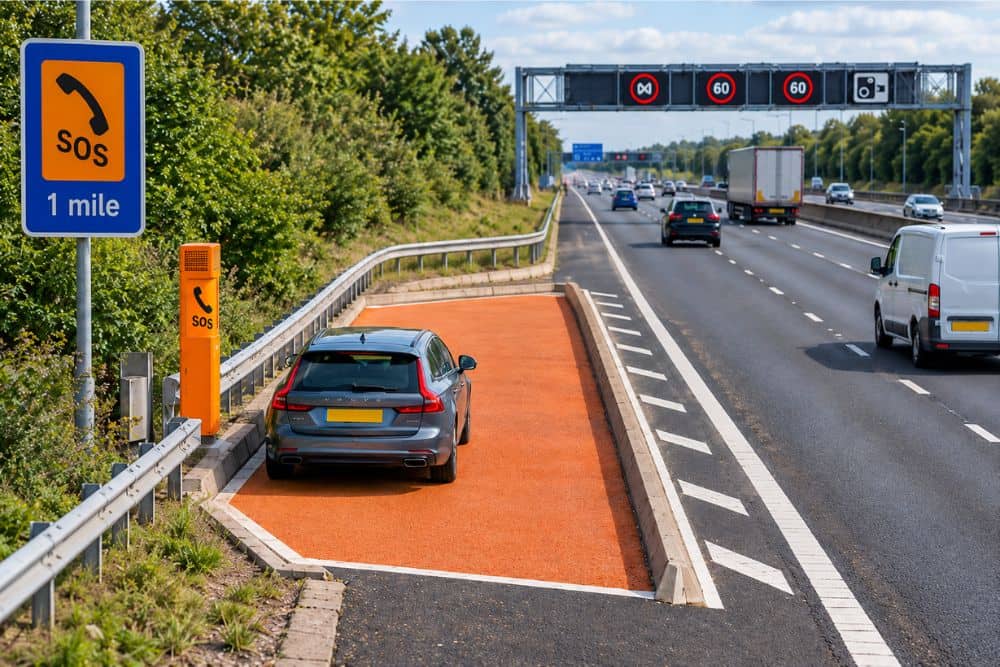
An emergency area, formerly called an emergency refuge area (ERA), is an orange-surfaced lay-by with an SOS phone. Steer for the next one and stop inside it.
- Spot the orange surface.
- Look for the blue sign with an orange SOS telephone symbol. It shows the distance to the next one.
- Park as far left as the space allows, with the wheels turned left.
Spacing varies from one stretch to the next, so the distance on each sign is your guide.
Step 3: Exit Through the Left-Hand Door
Leave through the left-hand door, the passenger side, away from live traffic. Every passenger leaves the same way. Unclip seatbelts only once the car has stopped.
- Keep children close and under control until everyone is behind the barrier.
- Pets stay inside the car. In an emergency, keep them under control on the verge.
Step 4: Wait Behind the Safety Barrier
Stand behind the safety barrier, up the grass verge or embankment where one exists. Nobody returns to the car, even in rain, cold or darkness.
- Stand back from the carriageway and keep the group together.
- Climb the embankment only if the ground is firm, and watch for drops and debris.
- Face oncoming traffic while you talk on the phone.
Leave the warning triangle in the car. Placing one means walking into moving traffic.
Step 5: Call 999 or National Highways
Call 999 when life is in danger, or when you cannot leave the car or reach a safe stop. In every other case, use the SOS telephone or call National Highways. Pick the route that matches your situation:
- Injury, fire or danger to life: call 999. It reaches the emergency services directly.
- In an emergency area or on a hard shoulder, no danger: use the SOS telephone to reach the control centre.
- Same place, phone not working: call National Highways from your mobile.
- Stopped in a live lane: call 999 and ask for the police. They alert the control centre, which closes the lane.
Tell the call handler three things:
- Location: road number, direction of travel, and the nearest marker post or driver location sign.
- Problem: what failed, how many people are with you, and who needs extra help.
- Position: in an emergency area, on a hard shoulder, or in a live lane.
Step 6: Contact Your Breakdown Provider
Call the breakdown provider once you have reported the breakdown, not before. Give the road, direction and marker post, and share your location from your phone. The provider sends a recovery vehicle. Whether recovery costs are covered depends on the breakdown cover in your policy, so check the terms.

Step 7: Wait for the Control Centre Lane Closure
Control centre operators close the lane with a red X once they confirm a stopped vehicle. Overhead gantries then show the red X above the lane, with lower speed limits ahead.
MIDAS (Motorway Incident Detection and Automatic Signalling) is an automatic signalling system. Sensors in the road trigger variable speed limits and queue warnings without waiting for an operator.
What to Do If Your Car Breaks Down on a Smart Motorway With No Hard Shoulder?
If your car breaks down on a smart motorway with no hard shoulder, lane 1 stays live all day, so aim for the nearest emergency area.
| Motorway type | Hard shoulder | Where to stop |
|---|---|---|
| All lane running | None; lane 1 always live | Emergency area |
| Dynamic hard shoulder | Opens as lane 1 when busy | Hard shoulder if closed; emergency area if open |
| Controlled motorway | Permanent, emergencies only | Hard shoulder |
| Conventional motorway | Permanent, emergencies only | Hard shoulder |
What to Do If Your Car Breaks Down on a Smart Motorway Before Reaching a Refuge Area?
If your car breaks down on a smart motorway before you can reach an Emergency Refuge Area (ERA), switch on your hazards and coast left towards it or a nearer slip road. Steering and brakes feel heavy without the engine but still work. Warning light first? Leave at the next exit or service area.
| Speed | ¾ mile | 1 mile | 1.5 miles |
|---|---|---|---|
| 60 mph | 45 seconds | 60 seconds | 90 seconds |
| 70 mph | 39 seconds | 51 seconds | 77 seconds |
Real times run longer because the car slows.
What to Do If Your Car Breaks Down on a Smart Motorway and You Are Stuck in a Live Lane?
If you break down on a smart motorway and are stuck in a live lane, leave the car only if the barrier is safely reachable.
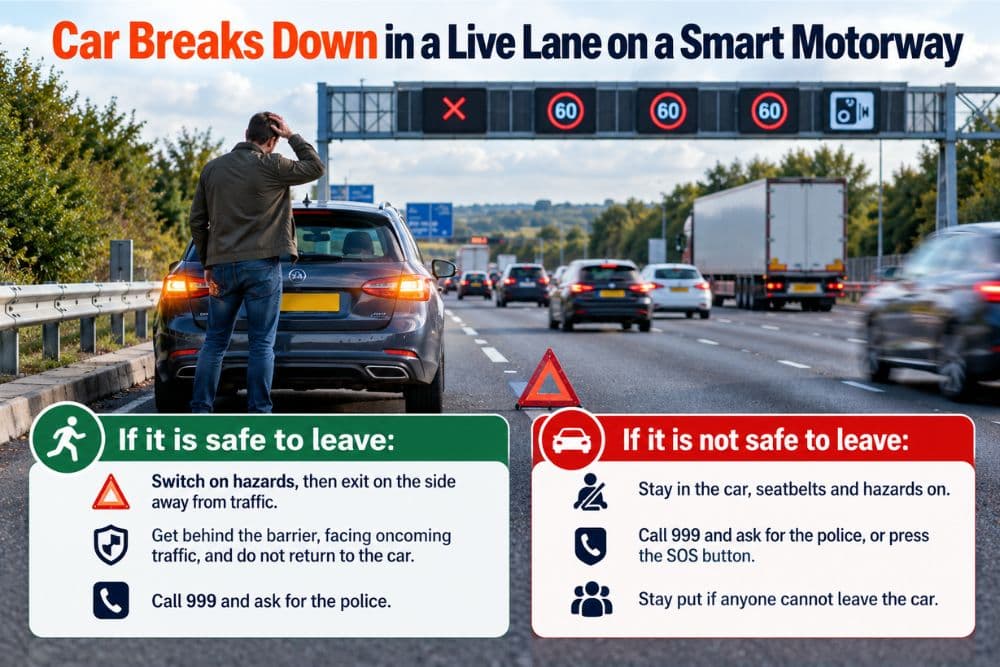
If it is safe to leave:
- Switch on hazards, then exit on the side away from traffic.
- Get behind the barrier, facing oncoming traffic, and do not return to the car.
- Call 999 and ask for the police.
If it is not safe to leave:
- Stay in the car, seatbelts and hazards on.
- Call 999 and ask for the police, or press the SOS button.
- Stay put if anyone cannot leave the car.
What to Do If Your Car Breaks Down on a Smart Motorway and the Lane Is Not Closed?
If your car breaks down on a smart motorway and the lane is not closed, approaching drivers still use it until an operator sets a red X. Stopped vehicle detection uses radar to flag the car, and the operator confirms it on CCTV. The target is detection within 20 seconds, and a March 2026 regulator report found the system meets national requirements. The standard asks for at least 80% of stopped vehicles to be caught, so some go unflagged. Call 999 straight away.
What to Do If Your Car Breaks Down on a Smart Motorway With No Mobile Signal?
If your car breaks down on a smart motorway and you have no mobile signal or a dead phone, use the free orange SOS telephone or the eCall button.
- Press the eCall SOS button if your car has one; it reaches a 999 operator and shares your location.
- Use the SOS telephone beside the car in an emergency area.
- Follow marker post arrows to the nearest SOS telephone on a hard shoulder.
- Wait behind the barrier after the call, and speak to the control centre before you rejoin.
What to Do If Your Car Breaks Down on a Smart Motorway in a Controlled Motorway Section?
If your car breaks down on a smart motorway in a controlled motorway section, pull onto the hard shoulder, which stays free for emergencies only. These sections have three or more lanes and variable speed limits shown on overhead gantries. Switch on your hazards, stop as far left as you can with the wheels turned left, and exit through the left-hand door. Use the free roadside telephone to reach the control centre, then wait behind the barrier.
What Happens After Your Car Breaks Down on a Smart Motorway and Help Arrives?
Once help arrives after your car breaks down on a smart motorway, a traffic officer takes charge and guides you through a fixed sequence.
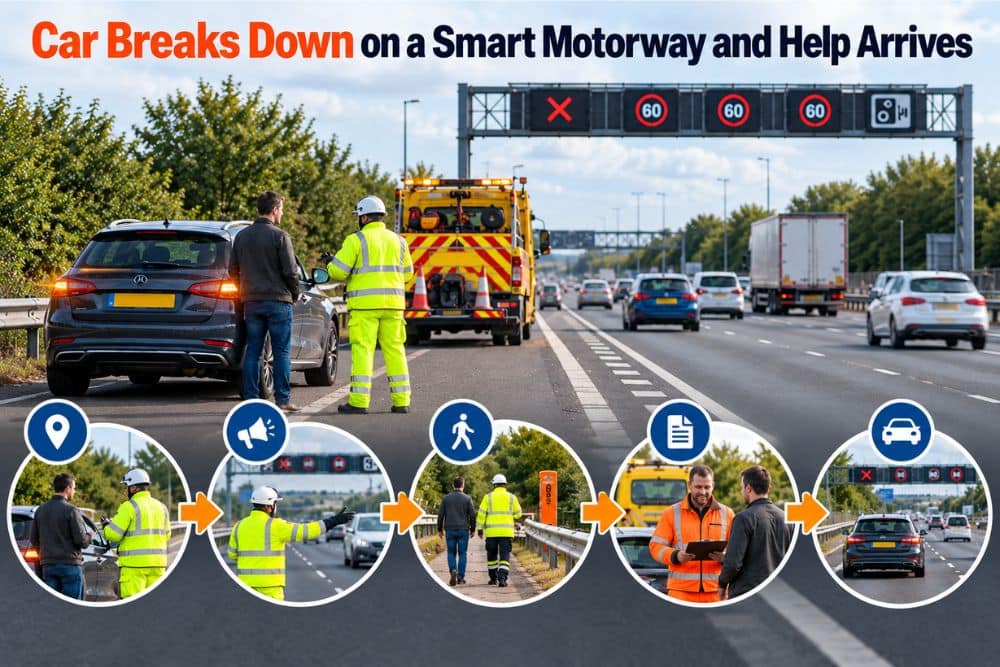
- Give your location, the fault and passenger details.
- Wait behind the barrier or in the car while operators set a red X.
- Follow the officer’s directions.
- Move to the place of safety the officer chooses.
- Share your details with the recovery crew.
- Wait for the control centre’s go-ahead before leaving an emergency area.
- Build speed on a hard shoulder, indicate and rejoin through a gap.
Traffic officers target an average ten-minute arrival on all lane running stretches with emergency areas over a mile apart.
What to Do Before Your Car Breaks Down on a Smart Motorway?
To prepare before driving on a smart motorway and reduce the risk of a breakdown, check the car and pack the kit.
- Check tyre pressures, spare included, and tread above 1.6 mm.
- Fill the tank or charge the battery; electric range falls at motorway speeds.
- Carry a hi-vis jacket, torch, warm clothes, food and water.
- Pack a charged phone and power bank.
- Save National Highways’ number and your cover details.
- Order a free Sunflower for your vehicle if you need extra support.
Final Thoughts
A breakdown on a smart motorway follows a clear order. Reach an emergency area when the car allows it. Leave by the left-hand door, stand behind the barrier and call 999 when life is in danger. Stay in the vehicle when the barrier is out of reach. Keep a charged phone, a power bank and your breakdown cover details in the car. Preparation keeps all passengers calmer and safer on the road.
Frequently Asked Questions
What should you do first if your car breaks down on a smart motorway?
Switch on your hazard warning lights, then move to the nearside lane, which is the left lane. It sits closest to emergency areas and exit slip roads. Indicate left first, check your mirrors and cross lanes only in a clear gap.
What is an emergency area on a smart motorway?
An emergency area is an orange-surfaced lay-by with an SOS telephone, formerly called an emergency refuge area (ERA). Blue signs with an orange SOS telephone symbol show the distance to the next one. Steer for it and stop inside.
Should you call 999 or National Highways after a breakdown?
Call 999 when life is in danger, or when you cannot leave the car or reach a safe stop. In every other case, use the SOS telephone or call National Highways. Injury and fire are examples of danger to life.
What should you do if your car breaks down before you reach an emergency area?
Switch on your hazards and coast left towards the emergency area or a nearer slip road. Steering and brakes feel heavy without the engine but still work. If a warning light appears first, leave at the next exit or service area.
What should you do if you are stuck in a live lane?
Leave the car only if the barrier is safely reachable, then stand behind it facing oncoming traffic and call 999. If it is not safe to leave, stay in the car with your seatbelts and hazards on, and call 999 or press the SOS button.
Is the lane closed straight away when a car breaks down?
No. Approaching drivers still use the lane until an operator sets a red X. Radar flags the stopped car, and the operator confirms it on CCTV. Call 999 straight away rather than waiting for the closure.
What should you do with no mobile signal?
Use the free orange SOS telephone or the eCall button. The eCall SOS button, fitted to some cars, reaches a 999 operator and shares your location. On a hard shoulder, follow the marker post arrows to the nearest SOS telephone.