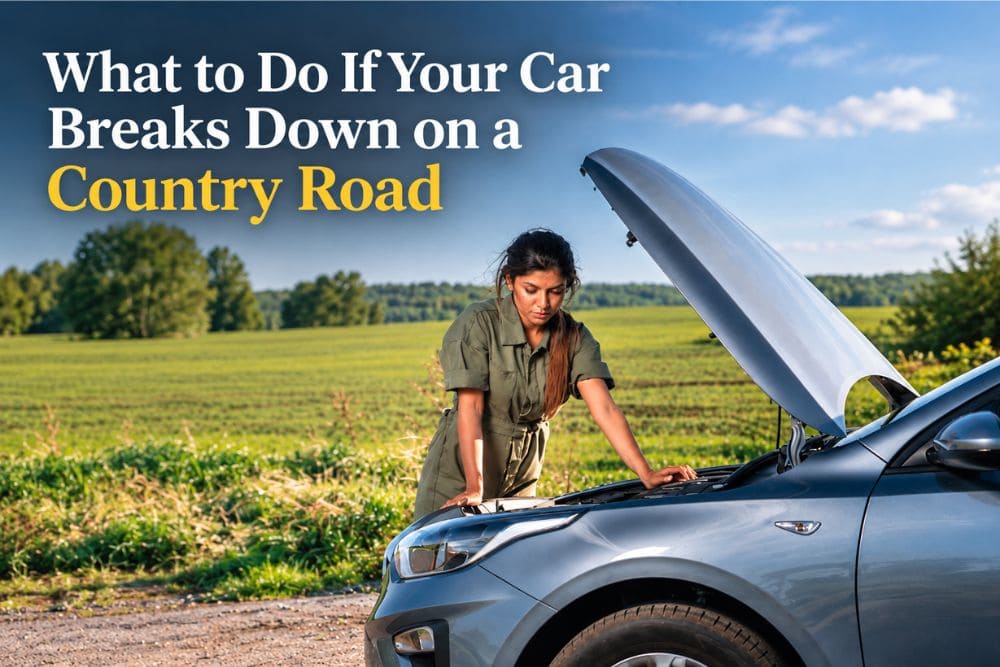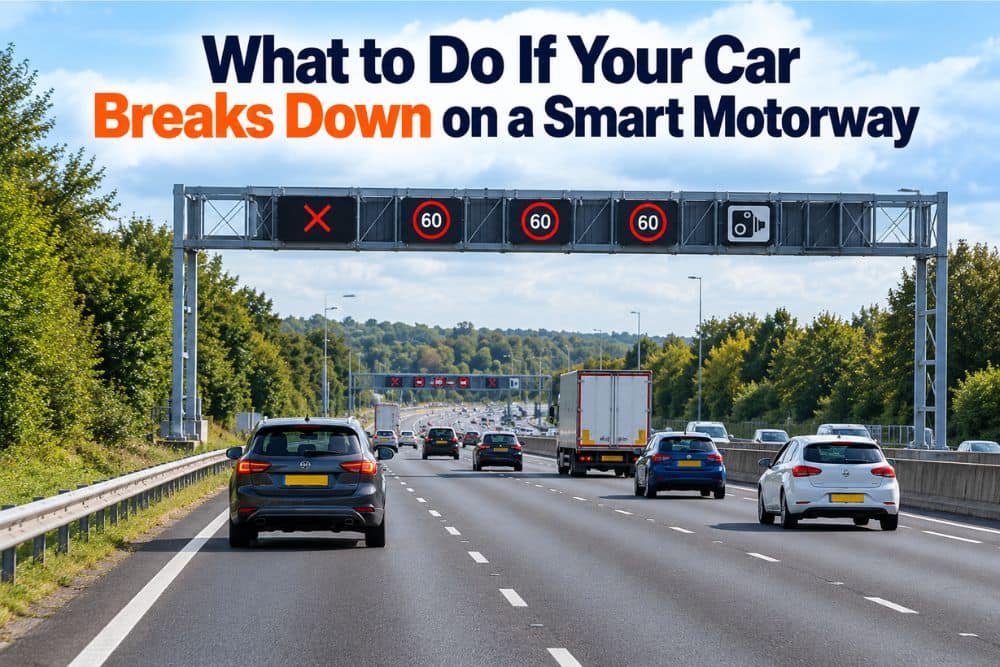
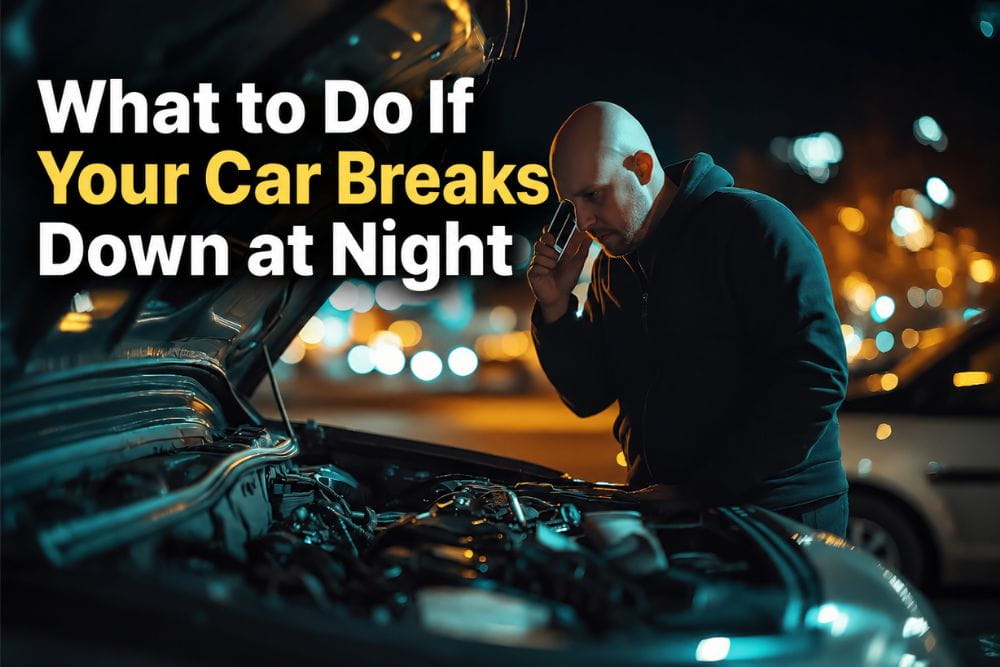
A night breakdown follows five steps in order: hazard lights on, a stop away from live traffic, exit through the left-hand door, a call to the breakdown provider or 999, and an exact location shared with the control room. Motorway breakdowns start with the next exit or a service area, then the left-hand hard shoulder. The M6 offers hard shoulders and emergency areas, while the A38 offers lay-bys, side roads and verges. Staying inside suits a live lane, and leaving suits a position behind a barrier.
A warning triangle suits ordinary roads only. A missing phone signal shifts the plan to 999 or 112, orange SOS phones and satellite SOS. Waiting calls for a charged phone, layers and short engine bursts. Lone drivers add live location sharing and locked doors. After recovery, a root-cause diagnosis and saved paperwork matter. Overnight parking depends on the location and any obstruction caused. Prevention rests on battery, tyre, fluid and fuel checks.
Table of Contents
Toggle1. Switch On Your Hazard Lights
Hazard warning lights switch on at the first sign of trouble, before the car stops. Flashing amber warns approaching drivers of a slowing or stationary vehicle, which buys them extra seconds in the dark. Sidelights stay on after the car stops, so the vehicle’s outline stays visible. Headlights switch off on a hard shoulder or in a lay-by, because the beams dazzle drivers behind. UK road rules back this routine: hazards for an obstructing vehicle, and sidelights in the dark.
2. Pull Over Away From Live Traffic
A car that loses power keeps rolling for a short distance. The target is the left edge of the road, chosen within the first few seconds.
- Keep the ignition on, because switching off locks the steering on some cars.
- Press the brake firmly. Servo assistance fades after a few presses, so the pedal feels hard but still works.
- Steer with both hands, because power steering weakens or fails.
- Choose the safest stop: an emergency area (ERA), hard shoulder, lay-by, side road or well-lit kerb.
- Signal left early, so following drivers read the move.
3. Leave Through the Left-Hand Door
Passengers exit through left-hand doors, away from moving traffic, when the car sits on a hard shoulder, in an ERA or beside a verge.
- Put on a hi-vis jacket first, if one is within reach.
- Children leave first and stay together, with adults behind.
- Climb over the safety barrier or up the bank, clear of the carriageway, watching for drops and uneven ground.
- Keep pets in the car. In an emergency, hold them on a short lead on the verge.
4. Call Your Breakdown Provider or 999
A breakdown provider handles a car stopped in a safe position. The 999 service handles a car in danger.

- Call 999 for a car stuck in a live lane, so police and traffic officers close lanes behind it.
- Dial 999 for an injury, fire, smoke or a threat.
- Phone the breakdown provider from a hard shoulder, ERA or lay-by when nobody is hurt.
- Press 55 when prompted on a mobile 999 call if speaking is unsafe, which routes the call to police.
5. Share Your Exact Location
A precise location shortens the arrival time, because control rooms and patrols work from the road, the direction and the exact position. Four details give that position:
- The road number and direction of travel, such as M6 northbound.
- The marker post number, printed on the small post at the roadside every 100 metres.
- A what3words address or phone GPS pin, sent by text or WhatsApp where signal exists.
- The last junction passed, as a backup when no other detail is available.
What Should You Do If Your Car Breaks Down on a Motorway at Night?
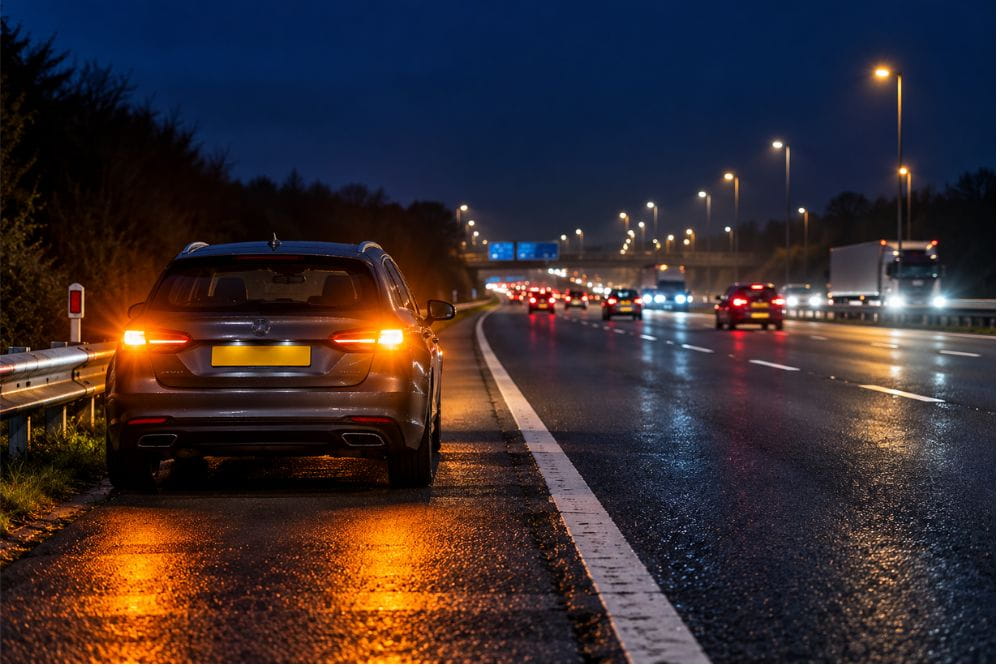
If your car breaks down on a motorway at night, the first target is the nearest safe stopping point: a service area, hard shoulder or ERA.
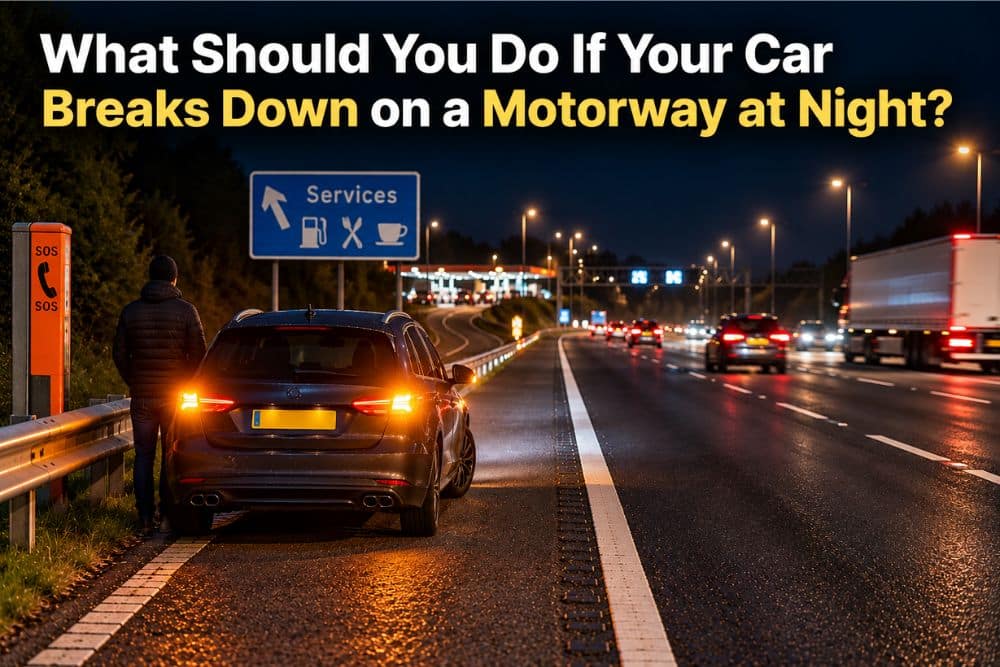
- Leave at the next exit or service area if the car still drives safely.
- Stop as far left as possible, with the front wheels turned left, so a struck car rolls towards the verge.
- Exit on the side furthest from traffic and wait behind the barrier.
- Skip repairs on the hard shoulder, because passing traffic at motorway speed leaves no safe working space beside the carriageway.
Where Should You Stop If Your Car Breaks Down at Night on M6, A38?
If your car breaks down at night on the M6 motorway or the A38 major A-road, the road type decides the stopping point.
- M6 with a hard shoulder: stop just beyond an orange SOS phone if possible, to shorten the walk.
- M6 smart motorway section: reach an ERA first, because the left lane carries traffic.
- A38 dual carriageway: use the nearest side road, lay-by or left verge.
- A38 built-up stretch: use a side street or a parking bay outside bus lanes.
- Stop short of bends, hill crests and bridges on both roads, where following drivers see a car late.
Should You Stay in the Car or Get Out When Your Car Breaks Down at Night?
When your car breaks down at night, the decision to stay inside or get out depends on position and visible danger. Four conditions settle it:
- Safe position with a barrier or verge: step out and wait well clear of the road.
- Live lane with no safe exit: stay inside with the seatbelt fastened and hazards on, then call 999.
- Smoke, fire or a burning smell: leave at once, move well clear and call 999.
- Threat from another person: call 999, then lock the doors if no safer place exists.
Should You Use a Warning Triangle If Your Car Breaks Down at Night?
Yes, a warning triangle suits a night breakdown on ordinary roads, provided the walk back is safe. A motorway rules it out completely.
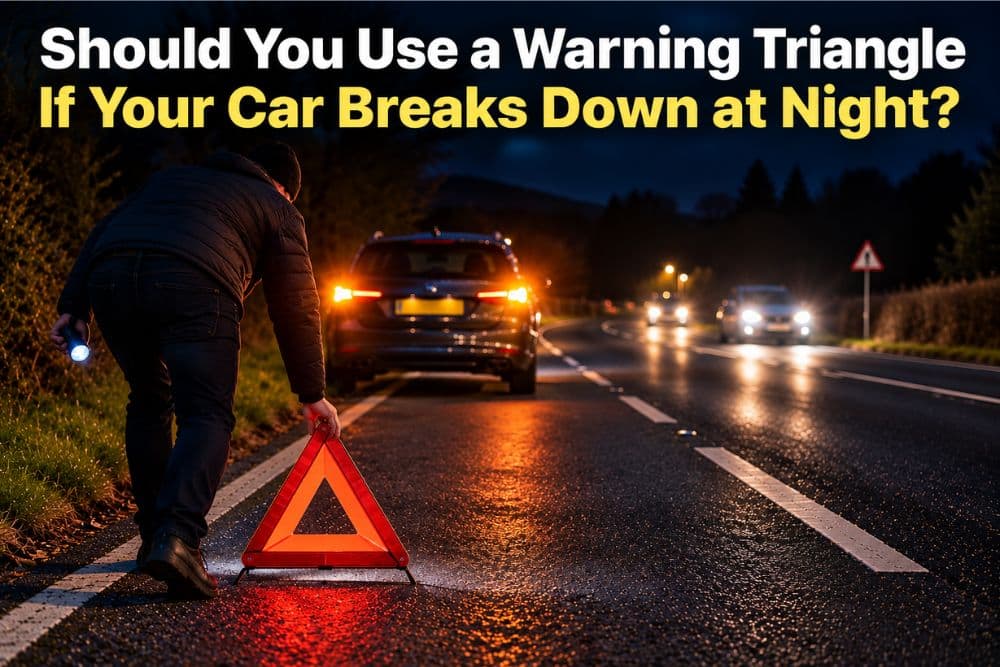
- Place the triangle at least 45 metres (147 feet) behind the car, on the same side of the road.
- Set it further back before a bend or hill crest, so drivers see it in time.
- Wear hi-vis and carry a torch before stepping out.
- Skip the triangle when traffic is heavy or visibility is poor, because personal safety comes first.
What Should You Do If Your Car Breaks Down at Night With No Phone Signal?
If your car breaks down at night with no phone signal, the options are an emergency call over any network, an orange SOS phone or satellite SOS.
- Dial 999 or 112 anyway, because emergency calls connect through any available network.
- Follow the marker post arrow to the nearest orange SOS phone on a motorway.
- Use satellite emergency SOS on supported phones, including recent iPhones.
- Walk to a signal spot or lit building only when the route stays off the carriageway.
- Otherwise, wait near the car, or behind the barrier on a motorway, for a patrol.
How Can You Stay Safe and Warm While Waiting After Your Car Breaks Down at Night?
Staying safe and warm after a night-time breakdown requires a charged phone, a controlled engine routine and layered insulation.
- Charge the phone from a power bank, sparing the car battery.
- Wear layers, hats and gloves, then wrap up in blankets or a sleeping bag.
- Run the engine in short bursts only with the exhaust clear of snow, mud or walls, because carbon monoxide is odourless and toxic.
- Use interior lights briefly, then switch them off.
- Sip warm drinks from a flask and eat energy bars.
What Should You Do If Your Car Breaks Down at Night When You Are Alone?
If your car breaks down at night while you are alone, personal security sits alongside road safety.
- Head for a lit petrol station or car park if the car still drives.
- Stay inside with the doors locked on a quiet or unfamiliar road, unless a barrier or verge offers a safer place.
- Send live location through Google Maps to a trusted contact, along with the road, direction and expected recovery time.
- Tell the provider about travelling alone, as lone drivers count as vulnerable motorists.
- Decline lifts from strangers.
What Should You Do After Your Car Breaks Down at Night and Has Been Recovered?
After your car breaks down at night and has been safely recovered, the priorities are a full diagnosis, organised paperwork and a repair booking before the next drive.
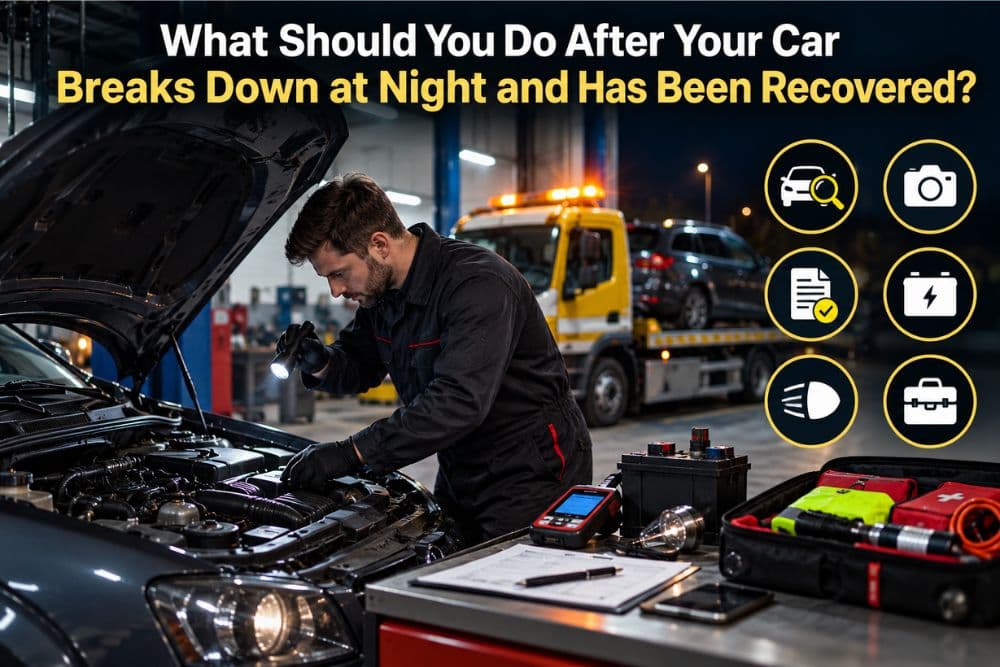
- Ask the garage for a root-cause diagnosis rather than a fluid top-up or a cleared warning light.
- Photograph the car, the location and any damage.
- Keep the recovery receipt, booking reference and driver’s report for the insurer.
- Test the battery, alternator and lights before the next night drive.
- Restock the boot kit after every use.
Can You Leave Your Broken-Down Car Overnight Until Morning?
Whether you can leave your broken-down car overnight depends on the location, the legal status of the car and any obstruction caused. A motorway hard shoulder or ERA is never an overnight parking place.
- Motorway or high-speed A-road: not permitted; police or traffic officers remove the car.
- Residential road or lay-by: usually tolerated for a taxed, insured car that blocks nothing and sits clear of bends.
- Clearway, bus lane or parking bay: risks a penalty charge or removal.
- Private car park or driveway: acceptable with the owner’s permission; unauthorised parking brings a parking charge notice.
How Can You Prevent Your Car Breaking Down at Night?
To prevent your car from breaking down at night, maintenance and pre-journey checks address the usual causes: battery, tyre, fluid, fuel and lighting faults.
- Battery: test annually once the battery passes three years old.
- Alternator: dimming headlights or a flickering battery light signal charging trouble.
- Tyres: check pressure and tread depth, with 1.6 mm as the legal minimum.
- Fluids: check oil, coolant and brake fluid before long night drives.
- Fuel: keep at least a quarter of a tank.
- Lights: test headlights, brake lights and indicators.
- Servicing: follow the manufacturer’s schedule to catch worn belts and starter faults early.
Final Thoughts
A night breakdown follows a fixed order: hazard lights, a safe stop, a left-hand exit, the right call and an exact location. Road type then sets the details, from motorway hard shoulders and emergency areas to A38 lay-bys and verges. Layers, locked doors for lone drivers and a clear exhaust before running the engine protect occupants while waiting. A garage diagnosis and saved paperwork close the incident, and battery, tyre, fluid and fuel checks lower the chance of another breakdown.
Frequently Asked Questions
Is it safe to stay in your car if it breaks down at night?
Staying inside suits only a car stranded in a live lane with no safe way out. In that position, the seatbelt stays fastened, hazard lights stay on and a 999 call goes to police. On a hard shoulder or verge, passengers step out and wait behind a barrier instead.
Can you use a warning triangle on a motorway?
No. UK road rules prohibit placing a warning triangle on any part of a motorway, because the walk to place it exposes the driver to fast traffic. On ordinary roads, the triangle goes 45 metres (147 feet) behind the car, on the same side of the road, provided the walk back is safe.
Who do you call if your car breaks down on a motorway at night?
Call 999 when the car sits in a live lane, or when an injury, fire, smoke or threat is present. Call the breakdown provider when the car sits on a hard shoulder or in an emergency area with nobody hurt. An orange SOS phone connects to a control centre that already knows the position.
Is it safe to keep the engine running for heat after a night breakdown?
Short engine bursts are safe only with the exhaust pipe clear of snow, mud or walls, because a blocked exhaust pushes carbon monoxide, an odourless toxic gas, into the cabin. Layers, hats, gloves and blankets supply most of the warmth. On a motorway, passengers wait behind the barrier, so the engine stays off.
What should a night breakdown kit contain?
A night breakdown kit contains a hi-vis jacket, torch, power bank, blanket, water, snacks and a first aid kit. The hi-vis jacket and torch keep occupants visible outside the car, while the power bank keeps the phone alive during a long wait. A warning triangle completes the kit for ordinary roads.